
| Japan transforms into a romantic landscape of colorful papers and bamboo for Tanabata (The Star Festival) on 7th July every year. The festival is originated from a Chinese legend “The Cowherd and the Weaver Girl”, to celebrate the annual reunion of two celestial lovers; weaving princess “Orihime” (the star Vega) and cowherd “Hikoboshi” (the star Altair) who were separated by the Milky Way. While famous festivals like Sendai’s happen in August, Kansai comes alive in early July with a unique blend of illuminated cityscapes, rituals and stunning waterside displays. |

| During the Nara Period (710–794), Japan was deeply fascinated by Chinese culture and tradition, modeled its new permanent capital, Heijo-kyo (today Nara), after the Tang Dynasty capital of Chang’an. Along with philosophy and fashion, imperial envoys brought back the Chinese festival of Qixi (七夕), which the Japanese court adapted as Kikkoden (The Festival to Plead for Skills). Introduced to the court by Empress Koken in 755, Kikkoden was initially a festival dedicated strictly to self-improvement and spiritual devotion. Elite women in Nara court would look at the sky on July 7th and pray to weaving princess Orihime, to bless them with skill in weaving and craftsmanship. At the same time, this Chinese tradition seamlessly fused with Japanese Shinto purification ritual called Tanabata-tsume. In this native custom, a sacred maiden would weave cloth by a river to welcome a visiting deity (kami), praying for a good harvest and protection from misfortune. The merging of these two traditions gave the festival its unique Japanese name Tanabata. When the capital moved to Heian-kyo (today Kyoto), the festival truly blossomed into an elegant celebration. In the Kyoto Imperial Palace, the night of July 7th was a spectacle of sensory indulgence and romantic longing. The Heian Period (794–1185) was the golden age of classical Japanese aesthetics, where courtly status was determined not by military might, but by one’s taste, artistic refinement and mastery of poetry. While the modern festival has evolved into an inclusive party with massive paper decorations and bamboo trees, you can easily experience the elegant spirit of ancient Kikkoden during your trip in Japan today. |
Kyoto
■ Kifune Shrine (貴船神社)
| Located in a forested valley north of Kyoto, Kifune Shrine celebrates its deep ties to water deities and Tanabata tale in the Tanabata Bamboo Decoration Light-up event (七夕笹飾りライトアップ). The iconic stone steps and the vibrant red lanterns are surrounded by massive bamboo stalks illuminated by colorful night lights. Write your wishes on Tanzaku slips and hang them among the branches. Do not miss trying the famous Mizu-ura Mikuji, a blank paper fortune that reveals its text only when floated on the shrine’s sacred mountain water. |
| Date: July 1 – August 15, 2026 (Illuminations run from dusk until 20:00) |
| Address | 〒601-1112 左京区鞍馬貴船町180 |
| WEB | https://kifunejinja.jp/ |
| General Admission | Free |
| HOW TO GET THERE |
|---|
| ▶ Eizan Train Line (to Kurama) Kibuneguchi Station → Kyoto Bus no. 33 → Kibune Bus Stop → 5 mins by walk ▶ Karasuma Subway Line Kokusaikaikan Station → Kyoto Bus no. 52 → Kibuneguchi Bus Stop → Kyoto Bus no. 33 (to Kibuneguchi Train Station) → Kibune Bus Stop→ 5 mins by walk ▶ Keihan Main Line Demachiyanagi Station → Eizan Train Line (to Kurama) Kibuneguchi Station → Kyoto Bus no. 33 → Kibune Bus Stop → 5 mins by walk |
■ Shiramine Jingu Shrine (白峯神宮)
| This shrine is historically connected to sports and the ancient court game of Kemari. On July 7th, it hosts the traditional Kikkoden Festival. Girls dressed in colorful Heian-period costumes perform classical court dances to honor the weaver princess “Orihime”. Watch the girls perform the Komachi Odori (a dance originated from Heian period) and see the offerings of five-colored threads dedicated to the improvement of crafts and sports. |
Date: July 7, 2026 (13:30 – 16:30)
| Address | 〒602-0054 京都府京都市 上京区今出川堀川東入飛鳥井261 |
| WEB | https://shiraminejingu.or.jp/english/ |
| General Admission | Free of charge |
| HOW TO GET THERE |
|---|
| ▶ Karasuma Subway Line Imadegawa Station |
■ Kodai-ji Temple | 高台寺
| Watch the Okawa River near Tenmabashi Station transforming into a glowing blue cosmic stream as thousands of LED “Inori Stars” are floating downstream to mimic the milky way in Reiwa Osaka Legend of the Milky Way (令和OSAKA天の川伝説/ Reiwa OSAKA Amanogawa Densetsu) |
Date: July 4 and 5, 2026 (17:00 – 21:30)
| Address | 〒605-0825 京都市東山区高台寺下河原町526 |
| WEB | https://www.kodaiji.com/ |
| General Admission | Adult ¥800 (temple + museum), Children middle and high school students: ¥400 (temple + museum) |
| HOW TO GET THERE |
|---|
| ▶ Keihan Main Line Gion Shijo Station (or) Hankyu Kyoto Line Kawaramachi Station → Kyoto City Bus no. 207 → Higashiyama Yasui Bus Stop → 5 mins by walk ▶ Kyoto City Bus no. 206 → Higashiyama Yasui Bus Stop → 5 mins by walk ▶ Kyoto Station → Taxi for 15 mins |
■ Matsuno’o Taisha Shrine (松尾大社)
| Watch the Okawa River near Tenmabashi Station transforming into a glowing blue cosmic stream as thousands of LED “Inori Stars” are floating downstream to mimic the milky way in Reiwa Osaka Legend of the Milky Way (令和OSAKA天の川伝説/ Reiwa OSAKA Amanogawa Densetsu) |
Date: July 7, 2026 (18:00)
| Address | 〒616-0024 西京区嵐山宮町3 |
| WEB | https://www.matsunoo.or.jp/en/ |
| General Admission | Free of charge |
| HOW TO GET THERE |
|---|
| ▶ Hankyu Arashiyama Line Matsuo-Taisha Station → 3 mins by walk ▶ Kyoto City Bus no. 28 → Matsuno’o Taisha-mae Bus Stop → 1 min by walk ▶ Keihan Bus Matsuno’o Taisha-mae Bus Stop → 1 min by walk |
■ Heian Jingu Shrine | 平安神宮
| The Heian Jingu Tanabata Wind Chime Festival (七夕風鈴まつり) hangs around 400 glass wind chimes (Furin) from the Taiheikaku bridge where located above the Seiho-ike pond inside the garden. |
Date: June 20 to August 31, 2026 (08:30 – 17:30)
| Address | 〒606-8341 京都市左京区岡崎西天王町 |
| WEB | https://www.heianjingu.or.jp/english/ |
| General Admission | Free (Shrine), ¥600 (Garden), ¥300 (wind chime paper slip) |
| HOW TO GET THERE |
|---|
| ▶ Tozai Subway Line Higashiyama Station → 10 mins by walk ▶ Kyoto City Bus no. 5 (or) no. 100 → Okazaki Koen Bus Stop (or) Heian Jingu-mae Bus Stop → 5 mins by walk ▶ Keihan Main Line Sanjo Station (or) Jingu Marutamachi Station → 15 mins by walk |
Osaka
| Osaka turns Tanabata into a visual spectacle blending urban tech with timeless romance. |
■ Umeda Tanabata Festival (第二十回梅田七夕)
| Held throughout early summer at the spectacular Umeda Sky Building, This event brings Tohoku’s giant Sendai-style paper streamers to the heart of Osaka. Visitors can walk the outdoor “Lumi Sky Walk” rooftop path, which is illuminated to look like a glowing milky way under the real night sky. You can also write your wishes on the colored paper and tie them to bamboo branches set up around the building. |
Date: 1 June – 7 July 2026
| Location | Shin Umeda City (Entrance Area, “Takimi-koji” Showa Retro Shopping Arcade, Star Pocket) |
| Address | 〒531-0076 大阪府大阪市北区大淀中1-1-90 |
| WEB | https://www.skybldg.co.jp/en/ |
| General Admission | Free |
How to go
- JR Osaka Loop Line Osaka Station → 10 mins by walk
- Hankyu Main Line Umeda Station → 10 mins by walk
■ Tanabata at Osaka Castle
| Osaka Castle Park joins the celestial celebration. The Main Tower (Osaka Castle Museum) features Tanabata at Osaka Castle (大阪城の七夕~天守閣で願いをこめて2026~), a special event from July 5 to July 7, 2026. You can write your wishes on Tanzaku and hang on the bamboo leaves, these are later brought to Hokoku Shrine where located within the castle park grounds for a sacred blessing ritual. |
Dates: July 1 to July 7, 2026 (9:00 – 17:30)
| Location | Osaka Castle Main Tower – Small Tenshu Base (Kotenshudai) |
| Address | 〒540-0002 大阪市中央区大阪城1-1 |
| WEB | https://www.osakacastle.net/ |
| General Admission | Free to participate in Tanabata, but require the general museum entrance fee ¥1,200 for adults (Children junior high school student and under enter for free) |
| HOW TO GET THERE |
|---|
| ▶ JR Osaka Loop Line Morinomiya Station or Osakajo-koen Station → 18 mins by walk ▶ JR Tozai Line Osaka-jo Kitazume Station → 21 mins by walk ▶ Osaka Metro Tanimachi Line Tanimachi Yonchome Station or Temmabashi Station → 19 mins by walk ▶ Osaka Metro Chuo Line Tanimachi Yonchome Station (or) Morinomiya Station → 18 mins by walk ▶ Nagahori Tsurumi-ryokuchi Line Morinomiya Station (or) Osaka Business Park Station → 18 mins by walk ▶ Keihan Main Line Tenmabashi Station → 19 mins by walk |
■ Reiwa Osaka Legend of the Milky Way
| Watch the Okawa River near Tenmabashi Station transforming into a glowing blue cosmic stream as thousands of LED “Inori Stars” are floating downstream to mimic the milky way in Reiwa Osaka Legend of the Milky Way (令和OSAKA天の川伝説/ Reiwa OSAKA Amanogawa Densetsu) |
Dates: July 7, 2026 (from around 19:00)
| Venue | Okawa river, Tenmabashi Station and Kitahama area |
| Address | 〒540-0032 大阪市中央区天満橋京町1-1 |
| General Admission | Admission ticket & Inori-boshi ticket: ¥2,500 |
| Reservation WEB | https://osaka-amanogawa.com/index.html |
| HOW TO GET THERE |
|---|
| ▶ Osaka Metro Tanimachi Line Tenmabashi Station → 2 mins by walk |
| There is nothing quite like the feeling of a Japanese summer night. The warm breeze carries the glass wind chimes through temple grounds. You stand shoulder-to-shoulder with locals in bright Yukata (summer Kimono) and tie your own wish to a bamboo tree. Tanabata Festival fills you with a deep sense of great happiness. Looking up at the stars, you feel connect to a timeless love story along with thousands of people hearts. It’s a pure magic – a sweet reminder that no matter where you are from, we are all looking at the same sky and dare to dream. Want to keep a piece of this starry magic with you forever? Celebrate the festival and decorate your own space by coming to visit our sticker online store. |
| STICKART (ステッカート) |
|---|
| ▶︎ 大阪発のデザイン・ステッカー専門店 A sticker store designed by artists from Osaka, Japan ▶︎ Powered by AG-TECH™: 夜間も目立つ反射素材採用 | 3年以上の屋外耐候・完全防水 Reflective sticker for high visibility at night, 100% waterproof and weather-resistant for outdoor use for 3 years+ ■ 購入金額1,500円(税込)以上で送料無料(日本全国) We offer free nationwide shipping on all purchases of 1,500 yen or more (tax included) |
RECOMMEND ITEMS
-

半開 (イエロー)
¥550 稅込(税込)
-

半開 (レッド)
¥550 稅込(税込)
-
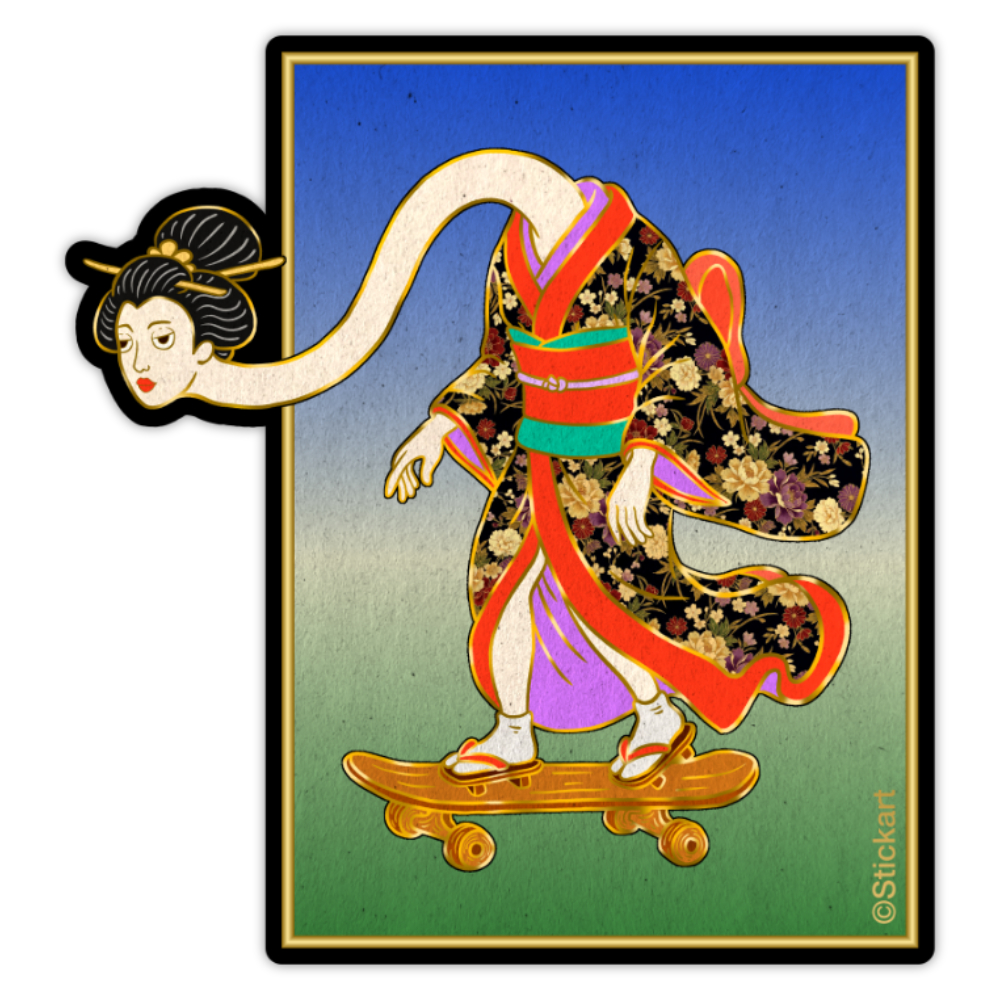
SK8妖怪・ろくろ首
¥550 稅込(税込)