
SPIRIT OF SUMMER: BON ODORI
| Every August, as Japan reaches peak summer humidity, the nation observes Obon, a centuries-old tradition where ancestral spirits are believed to return home to visit their living relatives. While rooted in family reunions, the season is traditionally paired with Kaidan (怪談 /Japanese ghost stories) told to create a chill against the oppressive heat. |
| Return of the Departed: Beliefs in Spirits |
|---|
| The heartbeat of Obon relies on the belief that consciousness survives physical death. Unlike Western concepts of ghosts as purely frightening entities, the spirits returning home during Obon are cherished family members. Families prepare for their arrival by building miniature spirit animals called Shōryō-uma (精霊馬/ spirit horses) and Shōryō-ushi (精霊牛/ spirit cows), a kind of traditional vegetable crafts made during Japan’s summer Obon festival to help transport ancestral spirits. Using a crisp cucumber with wooden toothpick legs to represent a fast horse, they ensure their ancestors can rush home quickly. Conversely, an eggplant is shaped into a slow-moving cow, allowing the spirits to take their time returning to the afterlife when the week concludes, heavily laden with the family’s offerings. In folk traditions, this period highlights the interconnectedness of past lives, karma and generational lineage. On the first night, small welcoming bonfires (Mukaebi) are lit outside doorsteps to guide the souls through the darkness. The home altar, or Butsudan, is meticulously cleaned and filled with vegetarian food offerings, sweets, tea and water (even sake and beer nowaday). This seasonal communion reminds the living that their current lives are built directly upon the choices, sacrifices and spirits of those who walked before them. |

A Night in the Woods: The Legend of the Weeping Willow |
|---|
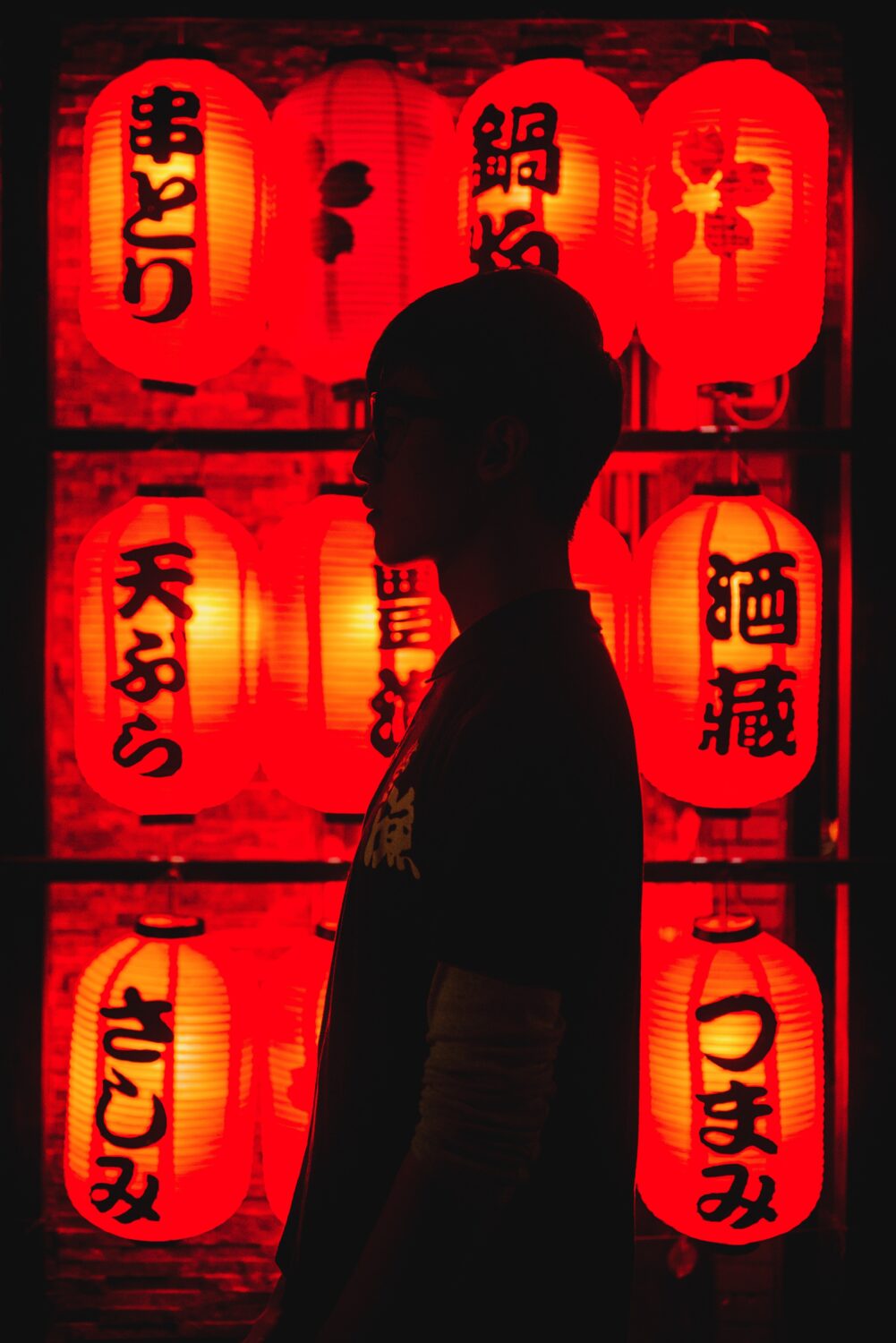
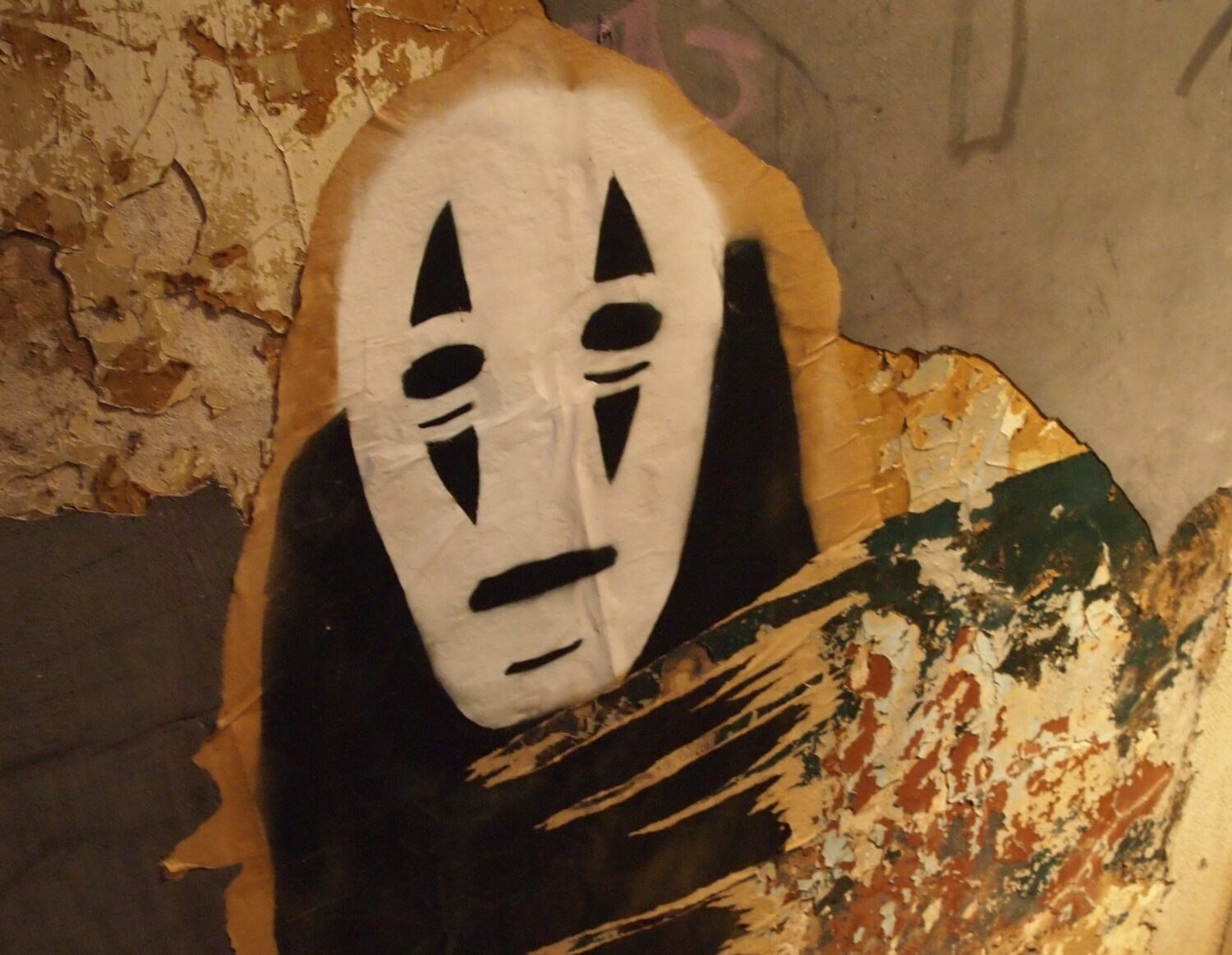
| To fully appreciate the chilling side of Obon, one must look to the classic folklore of Kaidan. Imagine walking past a remote temple courtyard on a moonlit August night, the rhythmic thud of a distant festival drum echoing through the humid air. According to old local lore, a traveler once took a shortcut through a dense forest path near Tokushima during Obon week. As the wind rustled the bamboo groves, the traveler spotted a pale woman dressed in a white yukata (summer Kimono), weeping quietly beneath a drooping willow tree. The traveler approached to offer help. When the woman slowly turned around, there were no features on her face – just a blank expanse of skin. Terrified face, the traveler ran blindly toward the bright lanterns of a nearby village festival, only to realize that the boundary between the living and the dead had completely dissolved under the mid-August moon. It is said that wandering spirits who have no living family left to build them fires often attach themselves to travelers, searching desperately for a way to experience the warmth of the living world just one last time. |
| Dancing for the Souls: BON ODORI and AWA ODORI |
|---|
| Rather than mourning in silence, the communities across Japan send their ancestors back to the spirit world with magnificent displays of dance and music. These dances serve as an offering of joyness and comfort to the visiting souls. |
| BON ODORI (Bon Dance) | 盆踊り |
|---|
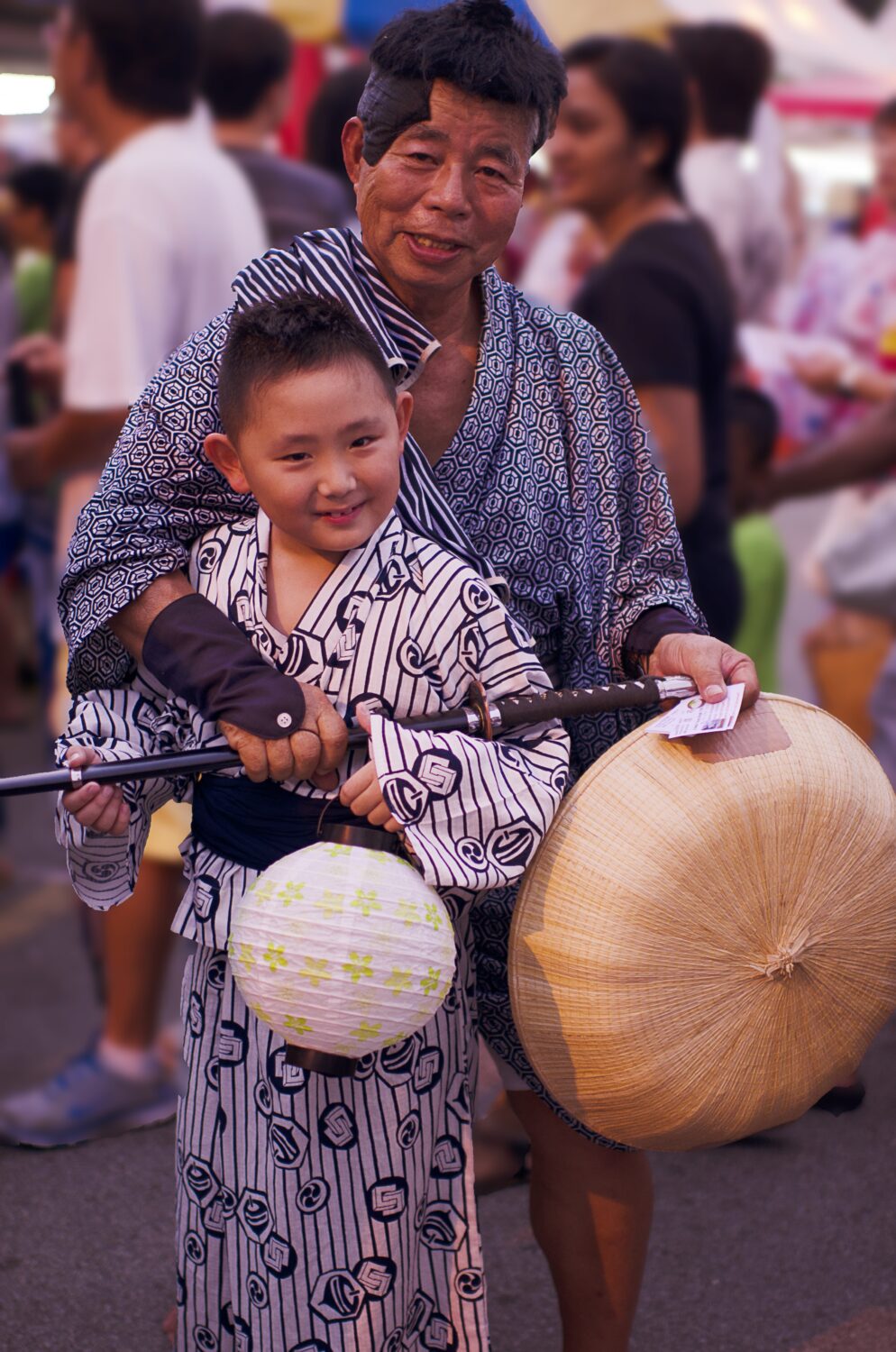
| Performed nationwide in neighborhood squares, parks, and temple grounds, Bon Odori is characterized by dancers moving in concentric circles around a raised wooden tower called Yagura. The musicians and singers perform atop the tower while the crowd moves gracefully below. The circular motions represent unity, equality, and the endless cycle of life and death, inviting both locals and wandering spirits to join the collective rhythm. For those traveling through or living in the Kansai region, there are spectacular ways to experience this living tradition firsthand. While neighborhood blocks host local gatherings, major iconic hubs present public events where all visitors are highly encouraged to join the circle. |

| Kobe Sea Bon Dance (Hyogo) |
|---|
| Recognized as one of the largest Obon gatherings in the region, the Kobe Sea Bon Dance takes place right against the beautiful waterfront backdrop of Meriken Park. This festival stands out because it relies heavily on live folk singing and instrumental performances rather than recorded music. Dancers of all backgrounds form big circles under the sea breeze, making it incredibly welcoming for international visitors. Date: August 15, 2026 (Saturday) 18:00~20:30 Venue: Meriken Park, Kobe city Admission Fee: Free of charge WEB: www.city.kobe.lg.jp/d49614/kuyakusho/chuoku/keikaku/uminobon/top.html |
| Matsugasaki Daimonji Odori (Kyoto) |
|---|
| Directly connected to the bonfires ritual on the mountain, this is one of Kyoto’s oldest surviving folk dances, performed on the grounds of the local temples on the night of August 16th. Dancers move to an acappella chant without any instrumental backing, keeping a sacred performance alive that dates back to 14th century. Schedule: ▶ August 15 (Around 20:00): Dancers perform the Sashi Odori and Daimoku Odori ▶ August 16 (Around 21:00): Sashi Odori and Daimoku Odori Performances take place after the “Myo” (妙) and “Ho” (法) bonfires of Gozan Okuribi are lit on the mountain at 20:00 Venue: Yusen-ji Temple | 涌泉寺 Address: 〒606-0945 京都市左京区松ヶ崎堀町53 WEB: www.gozan-okuribi.com/2022/en/myouhou.html How to get there: Kyoto Municipal Subway Karasuma Line Matsugasaki Station → 12 mins by walk |

| AWA ODORI | 阿波おどり |
|---|
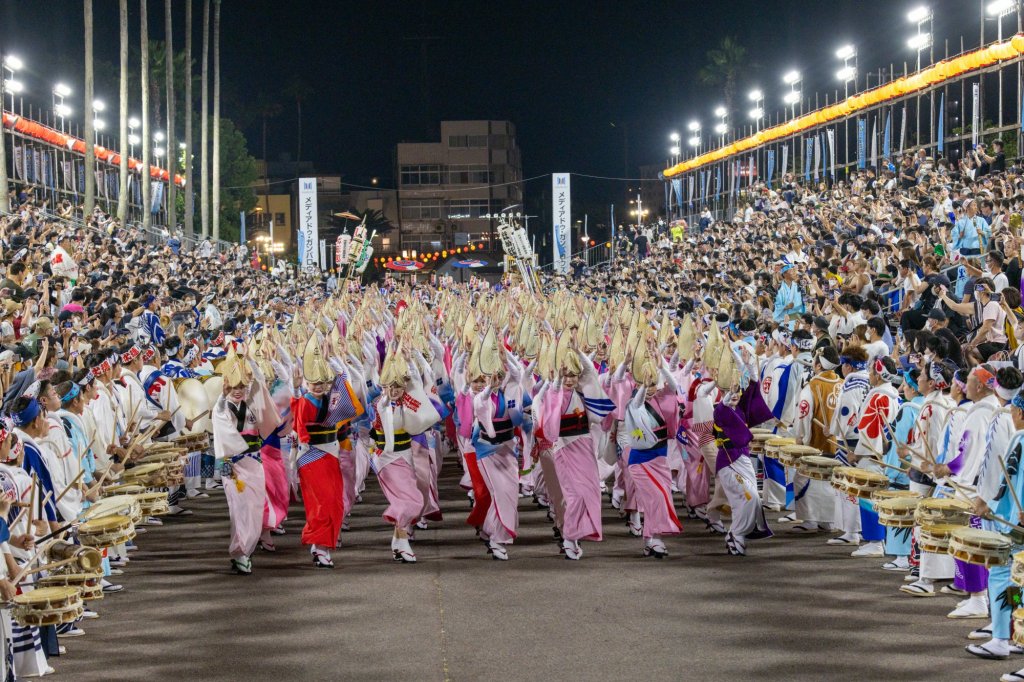
| Originated from the tradition of Bon Odori in Tokushima Prefecture on Shikoku Island. The Awa Odori is Japan’s largest and most famous dance festival, drawing over a million spectators. Unlike the circular pattern of Bon Odori, Awa Odori features an energetic parade style. Groups of dancers known as Ren march through the streets to the beats of taiko drums, flutes and three-stringed shamisen. The festival’s famous chant proclaims: “The dancers are fools, the onlookers are fools, both are fools, so why not dance!” Historically, this ecstatic movement began as a dance of pure gratitude and spiritual liberation. |
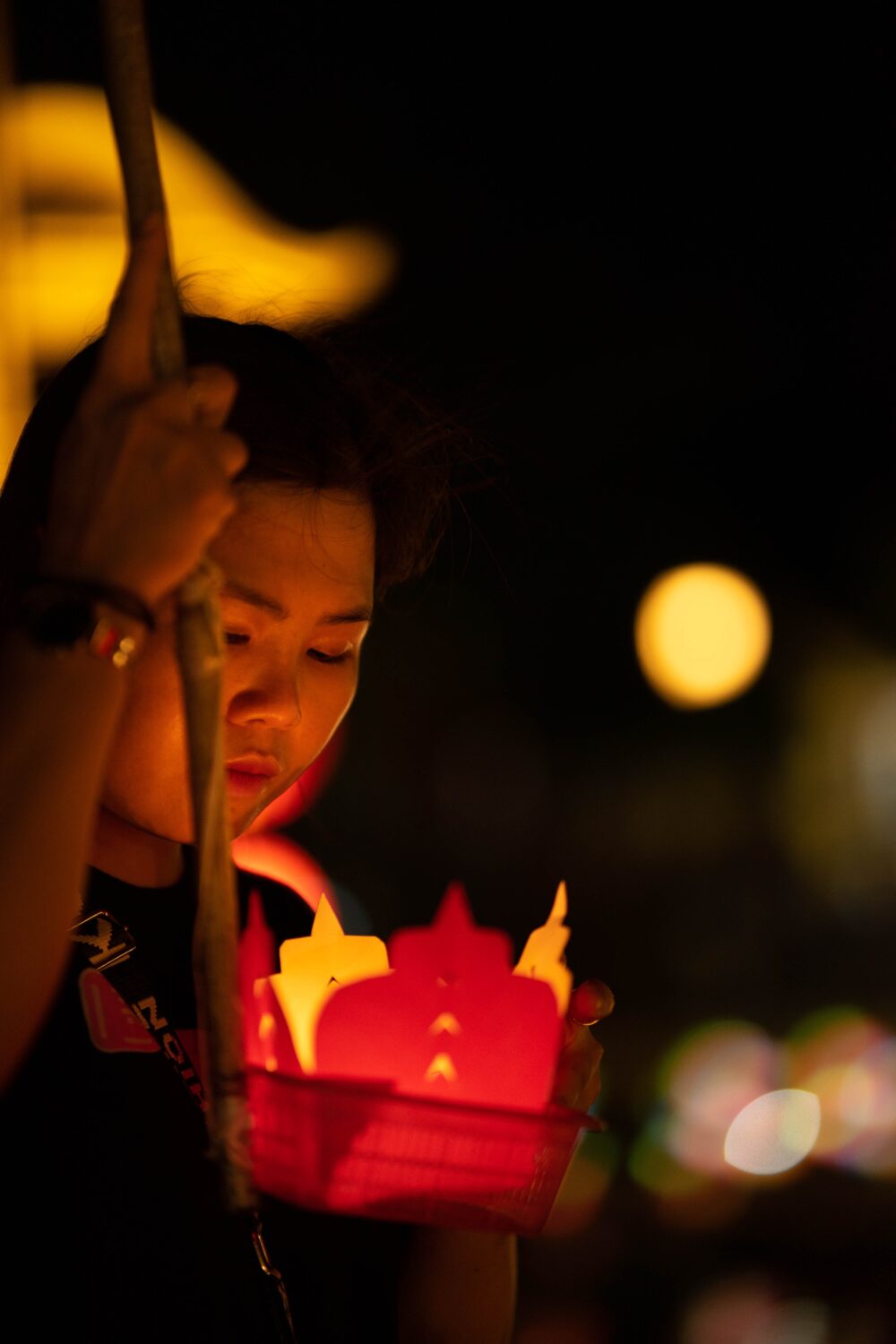
| As Obon week draws to a close on August 16th, the mood shifts from festivities celebration to serene farewell. Communities light the send-off bonfires (Okuribi) on mountainsides in Kyoto city or gently float thousands of illuminated paper lanterns (Toro Nagashi) down rivers and out to the sea. Watching the glowing lights drift into the dark waters, carrying prayers, memories, and ancestral spirits safely back to the deep peace of the afterlife until next summer arrives. |
| llumination for Ancestors: Nara Tokae | なら燈花会 |
|---|
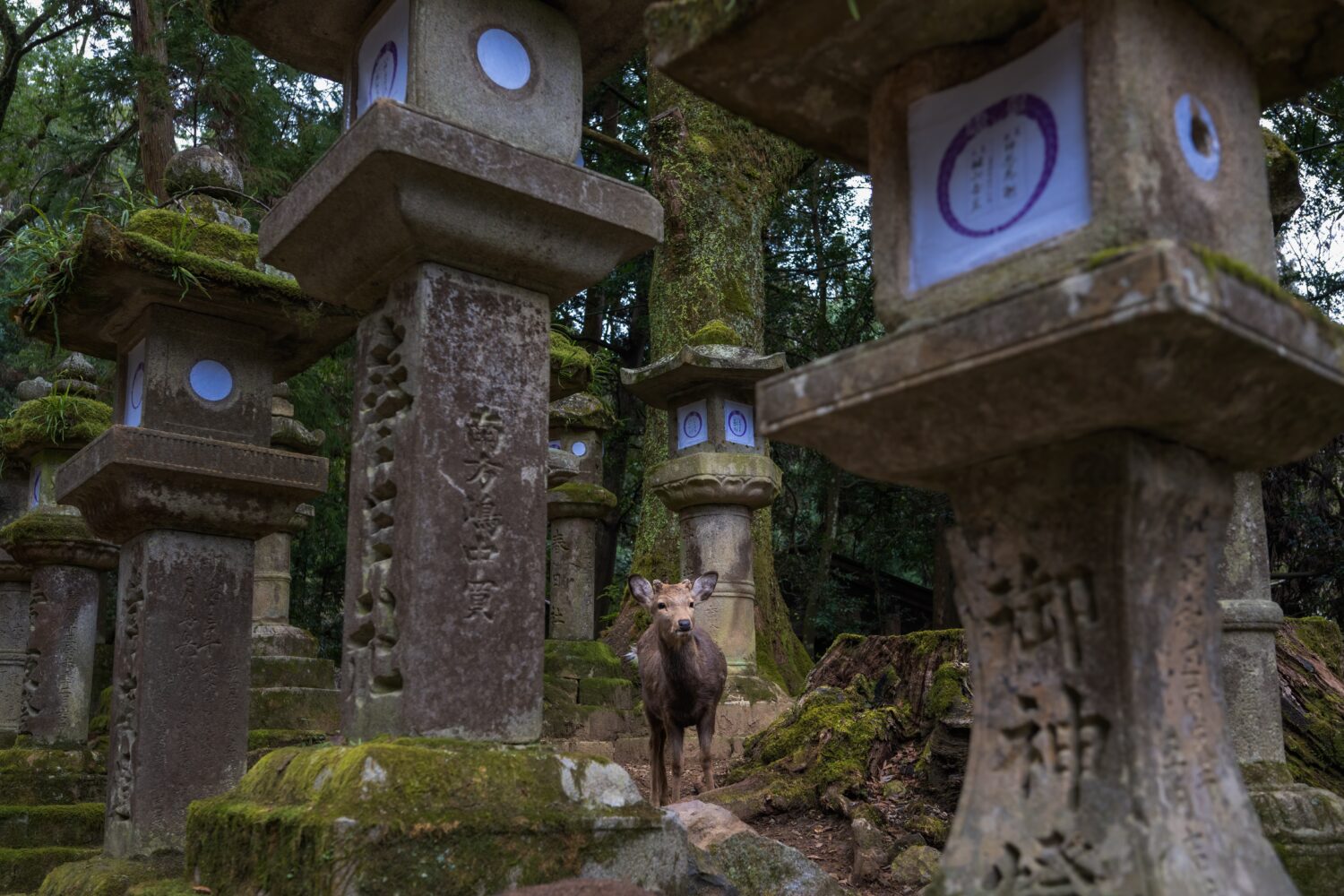
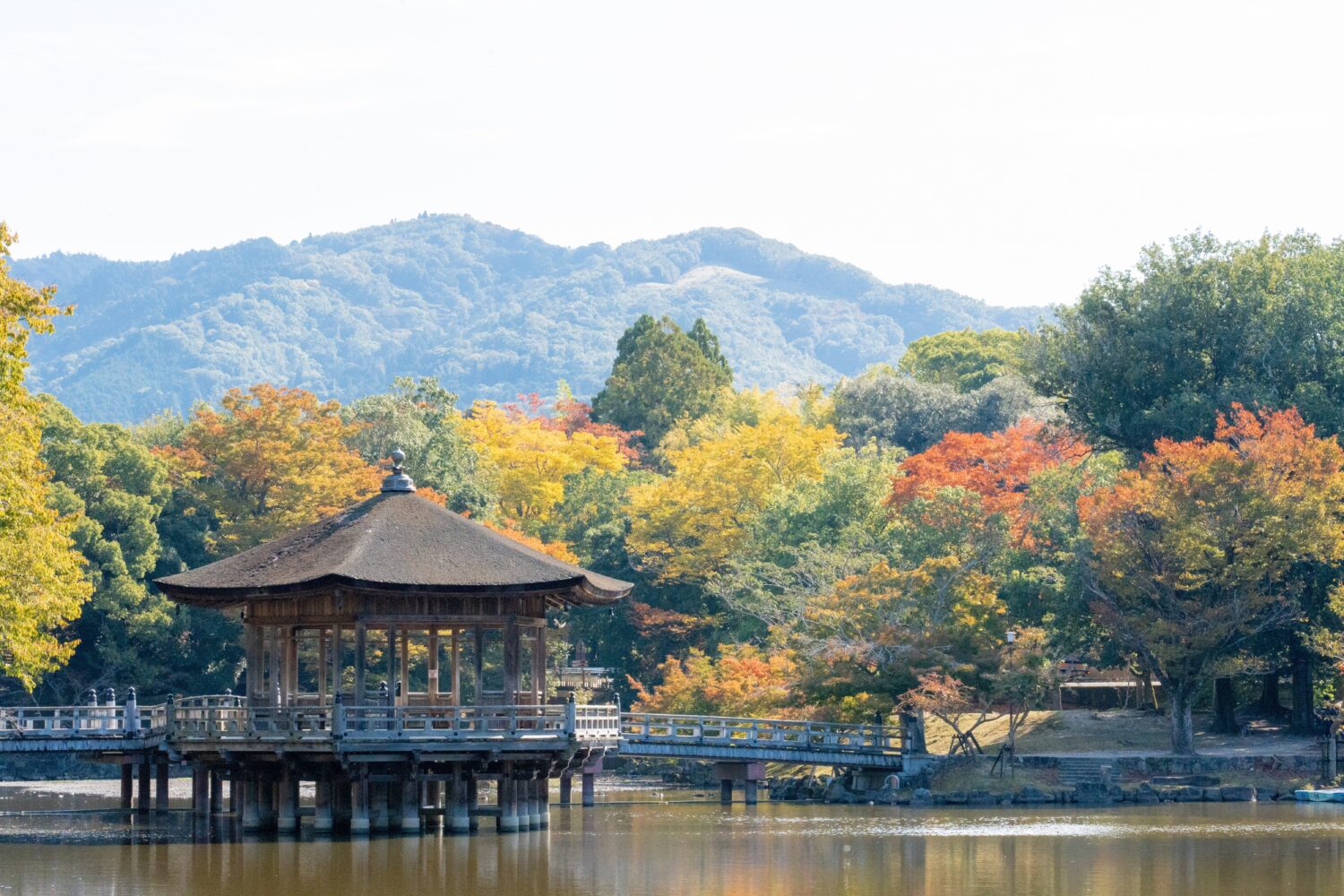
| For those wishing to experience the spiritual beauty of this season, the Nara Tokae offers an unforgettable celebration. Held in the ancient capital of Nara, this festival transforms the area surrounding Nara Park, Todai-ji Temple and Kofuku-ji Temple into a sea of glowing lights. Over 20,000 handmade candles in paper cups are meticulously arranged across the lawns and temple grounds. The term Tokae refers to the flower-shaped pattern that sometimes forms at the tip of a candle wick, which is considered a symbol of good luck in Buddhist tradition. Visitors can purchase and light their own candles to add to the display, offering a personal prayer for their ancestors or past lives. The highlight of this luminous festival takes place at Sarusawa Pond and the Ukimi-do Water Pavilion in Nara. Here, small wooden boats sail slowly across the dark waters, weaving through thousands of glowing float lanterns that drift peacefully across the pond. The traditional hexagonal water pavilion floats gracefully in the center, completely illuminated by warm candle fire. With the bright mid-August moonlight acting as a stunning backdrop, the golden reflections shimmering on the water create a serene atmosphere that perfectly captures the spiritual essence of Obon. Visitors can purchase and light their own candles, offering a personal prayer for their ancestors or past lives as they take in this magical vista. Date: August 5 – August 14, 2026 (19:00 – 21:30) Venue: Ukigumo Garden, Asajigahara, Ukimi-do Floating Pavilion, Sarusawa Pond and Gojunidan Nara Kasugano International Forum Iraka, Todai-ji Temple, Kofuku-ji Temple Area in front of the Nara National Museum WEB: www.toukae.jp/ |

| Beyond Japan: Hungry Ghost Festival across Asia |
|---|
| While Japan focuses on welcoming family ancestors during Obon, many other Asian cultures observe a parallel tradition known as the Hungry Ghost Festival (中元節/ Zhongyuan Jie, or 盂蘭盆節/ Yu Lan Jie). Celebrated extensively in China, Taiwan, Singapore, Hong Kong, Malaysia, Thailand (สารทจีน) and Vietnam (Tết Vu Lan), this festival spans the entire seventh month or the ghost month (鬼月) on the lunar calendar. According to Buddhist and Taoist beliefs, the gates of the underworld are opened, letting all spirits including “hungry ghosts” (餓鬼/ Gaki in Japanese folklore). These are the neglected souls who have no living descendants to pray for them, or who passed away with unfulfilled desires and bad karma from their past lives. To appease these wandering spirits and prevent them from causing mischief, people across Asia lay out elaborate street offerings: ・Feasts on the Streets: Sidewalks are lined with plates of roasted meats, fruits and rice cakes meant to satisfy the ghosts’ spiritual hunger. ・Joss Paper and Hell Banknotes: Families burn paper money, paper cars and luxury goods miniature so the spirits can enjoy financial comfort in the afterlife. ・Getai Performances: In places like Singapore and Malaysia, vibrant outdoor concerts and Chinese opera stages are set up to entertain both the living and the dead. Crucially, the front row of the red seats is always left completely empty – reserved strictly for the invisible ghostly guests of honor. |
| Bring the Spirit of Japan Home! |
|---|
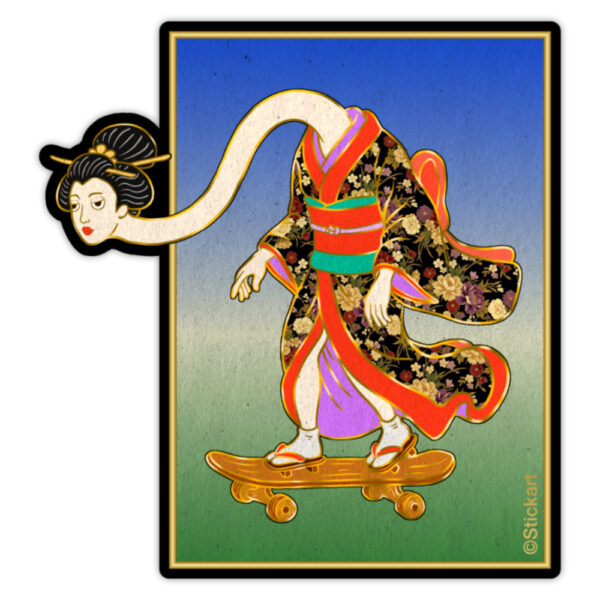
| Love the mystical aesthetic of Japanese folklore, friendly ghosts, and traditional summer festivals? Explore our curated collection of premium stickers featuring adorable Yokai, glowing lanterns and Japanese ghosts icons. Visit our Sticker online store to deck out your laptop, water bottle, or smartphone with the magic of Japanese tradition today! |
-

提灯ラントン BE ORIGINAL(赤)
¥550 稅込 -

提灯ラントン BE ORIGINAL(黒)
¥550 稅込 -

提灯ラントン Light Your Way with ベア
¥550 稅込 -

提灯ラントン ベロベロ初心者(白)
¥550 稅込 -

提灯ラントン ベロベロ初心者(金)
¥550 稅込 -

提灯ラントン 映画撮影(ネイビー)
¥550 稅込 -

提灯ラントン 映画撮影(ライトブルー)
¥550 稅込 -
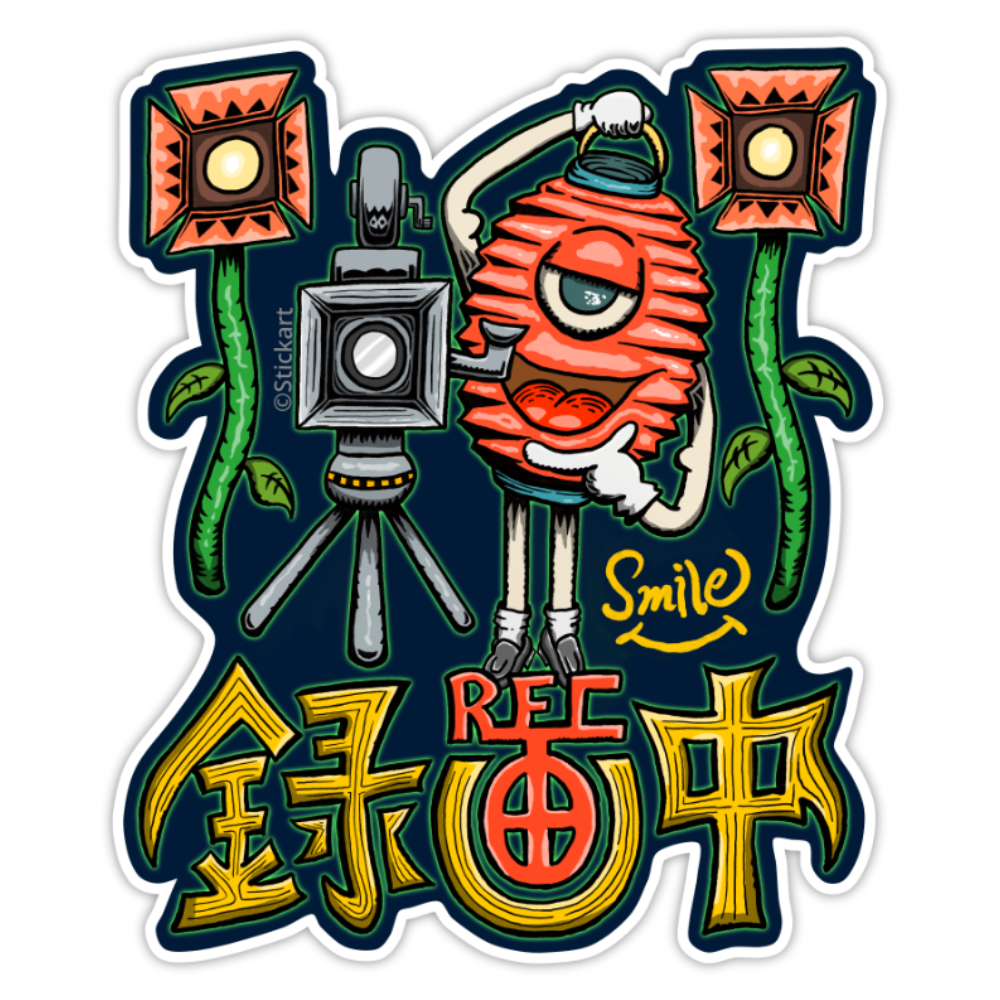
提灯ラントン 録画中(ネイビー)
¥550 稅込 -
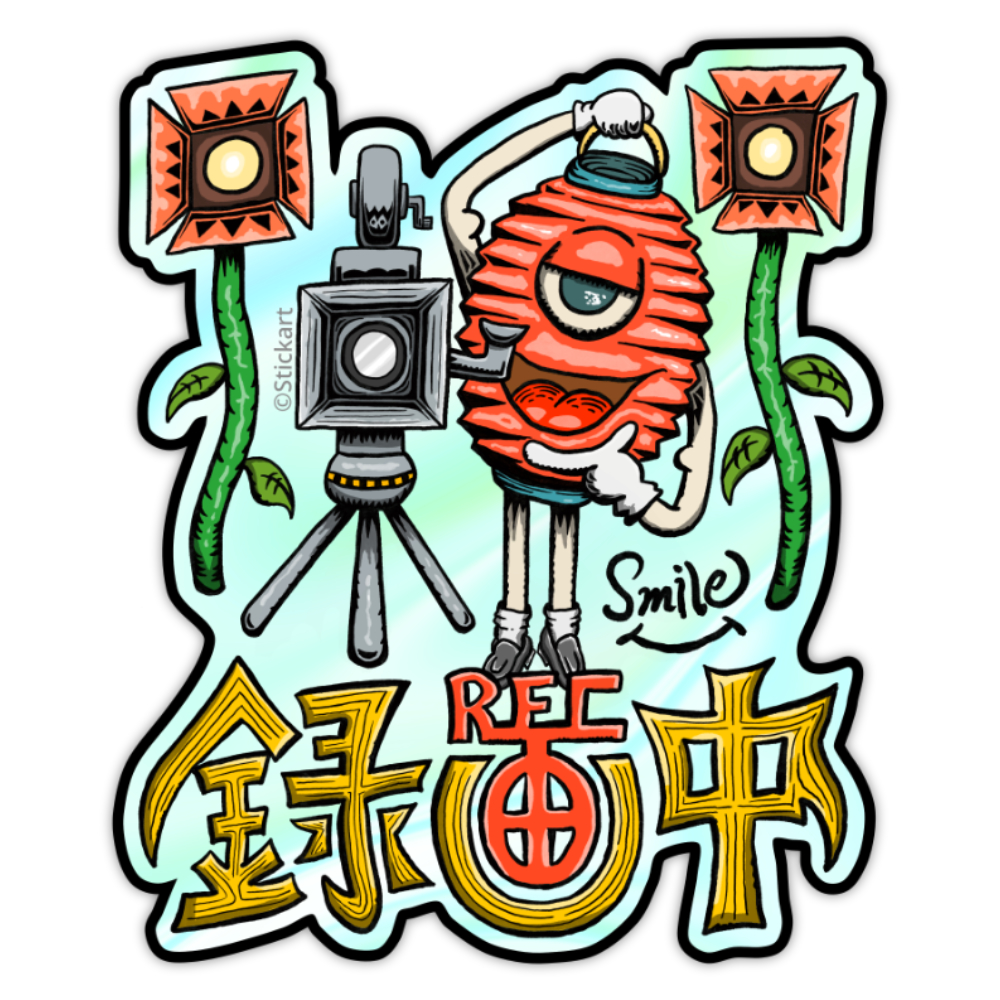
提灯ラントン 録画中(ライトブルー)
¥550 稅込
| STICKART(ステッカート) |
|---|
| ▶︎ 大阪発のデザイン・ステッカー専門店 A sticker store designed by artists from Osaka, Japan ▶︎ Powered by AG-TECH™: 夜間も目立つ反射素材採用 | 3年以上の屋外耐候・完全防水 Reflective sticker for high visibility at night, 100% waterproof and weather-resistant for outdoor use for 3 years+ ■ 購入金額1,500円(税込)以上で送料無料(日本全国) We offer free nationwide shipping on all purchases of 1,500 yen or more (tax included). |